
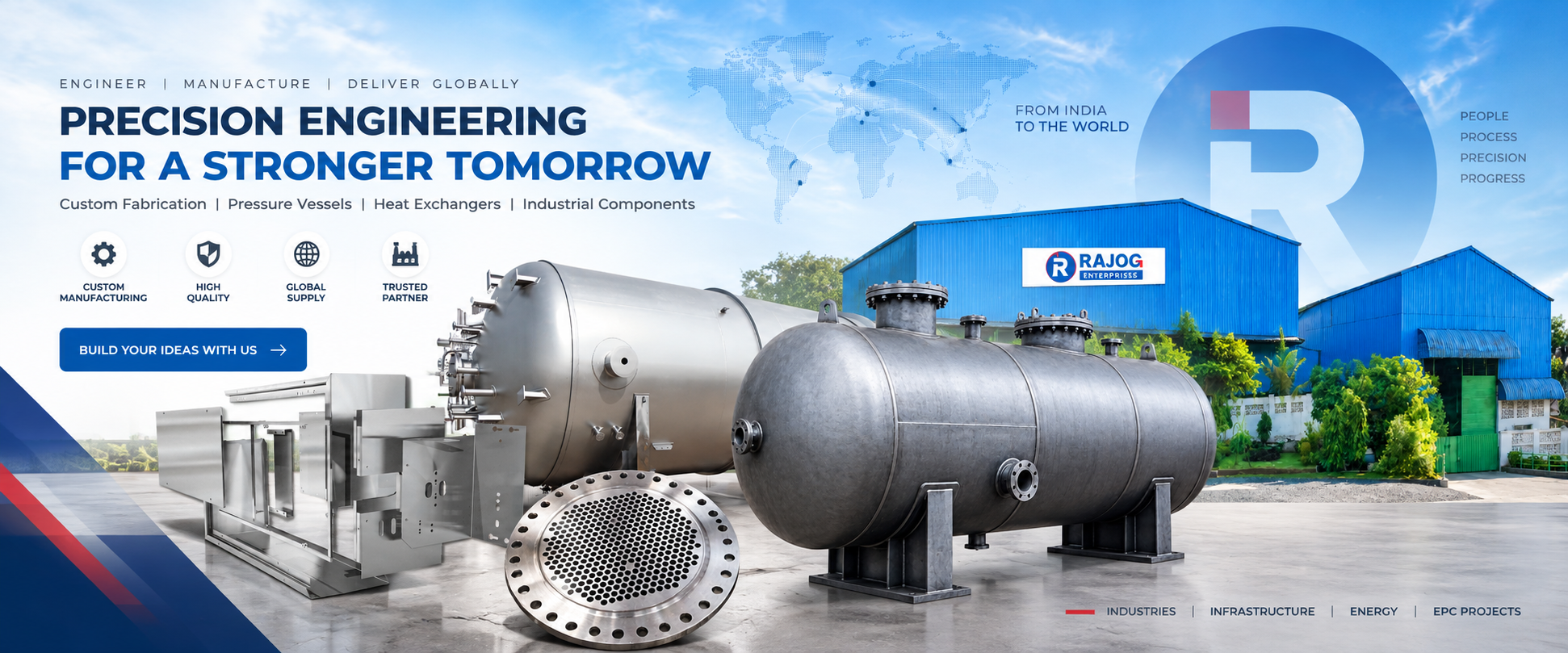
Large Component Machining Guide
Large component machining requires careful planning, suitable CNC equipment, controlled workholding and accurate inspection. This guide explains the key stages, challenges and considerations involved in machining large industrial and engineering components.
What is large component machining?
Large component machining is the manufacturing process used to machine oversized or heavy engineering components that require substantial machine capacity, work envelope and handling capability. These components are commonly produced according to engineering drawings, technical specifications and project-specific requirements.
When is large component machining required?
Large component machining becomes necessary when conventional machining equipment cannot accommodate the component's size, weight or machining requirements. The machining approach depends on the component geometry, material, tolerances and required operations.
Challenges in machining large components.
Machining large components involves different challenges compared with standard-size parts.
Component weight
Heavy components require appropriate loading, positioning and handling systems throughout production.
Workholding
The component must remain stable during machining to prevent movement, vibration or dimensional variation.
Machine capacity
Machine travel, table capacity, spindle capability and available tooling must match the component requirements.
Dimensional accuracy
Large components can require accurate positioning across multiple machining operations.
Thermal effects
Temperature changes can influence dimensional measurements and machining accuracy, particularly on large components.
Inspection
Large components require suitable inspection methods to verify critical dimensions and features.
Types of large components that can be machined.
Large component machining can cover many industrial component categories.
Tube sheets
Large tube sheets require accurate hole positioning and drilling patterns for heat exchanger applications.
Support plates
Support plates can require precision drilling, milling and machining according to engineering drawings.
Baffle plates
Baffles may require repeated hole patterns, slots and other machined features.
Heavy machined components
Custom heavy components can combine milling, boring, drilling and other machining operations.
Fabricated and machined components
Fabricated structures can undergo machining after fabrication to achieve accurate mounting and interface dimensions.
Large component machining process.
A typical machining workflow can include the following stages.
Drawing review
The engineering drawing is reviewed to understand overall dimensions, critical tolerances, hole patterns, machining allowances, surface requirements and datum references.
Manufacturing planning
The machining sequence is planned based on component geometry and required operations.
Material and component preparation
The required material or fabricated component is prepared for machining according to the project specification.
Workholding and alignment
The component is positioned and securely held on the machine. Accurate alignment is important before machining critical features.
Rough machining
Initial material removal establishes the required geometry while retaining appropriate machining allowance.
Finish machining
Critical dimensions and surfaces are brought to their specified requirements.
Drilling and boring
Required holes, bores and other internal features are machined according to the drawing.
Inspection
Finished dimensions and critical features are inspected against the applicable requirements.
CNC machines used for large components.
Different machine configurations may be selected depending on the component.
CNC plano milling
Suitable for large components requiring milling operations across substantial work areas.
Floor boring
Useful for large and heavy components requiring boring and precision machining operations.
VTL machining
Vertical turning operations can be used for suitable large-diameter components.
Double-column machining
Provides a machining configuration suitable for large components requiring extensive working envelopes.
Radial drilling
Can support drilling operations on large components where appropriate.
CNC deep-hole drilling
Particularly important for components requiring accurate, deep and controlled holes.
Deep-hole drilling for large components.
Some large engineering components require holes with significant depth-to-diameter ratios. For tube sheets and similar components, drilling accuracy can directly influence the fit and assembly of downstream equipment. CNC deep-hole drilling requires control over the following.
Importance of workholding and fixturing.
Workholding is a critical part of large component machining. The component must be positioned securely while allowing access to the required machining areas. For particularly large components, handling and setup planning should be considered before production begins.
Drawing and tolerance requirements.
A clear engineering drawing helps the machining team understand the required component geometry. For drawing-based manufacturing, the supplier should review the technical requirements before finalizing the machining approach.
Large component machining + fabrication.
Some industrial components are produced through a combination of fabrication and machining. This approach can be useful when the final component combines fabricated geometry with precision-machined interfaces. A typical sequence may involve the following.
Material considerations.
The machining approach depends on the material specified for the component. The material should therefore be confirmed from the engineering drawing, purchase specification or approved project documentation before machining begins. Material selection can influence the following.
Inspection and quality control.
Inspection is an important stage in large component manufacturing. Inspection methods should be selected according to the drawing and project requirements. Depending on the component requirements, inspection may cover the following.
Large component machining checklist.
Before sending a large component for machining, buyers should confirm the following.
Component information
- Overall size
- Component weight
- Material
- Geometry
- Machining allowance
Drawing information
- Latest drawing revision
- Dimensional tolerances
- Hole pattern
- Critical dimensions
- Datum references
Machining requirements
- Required machining operations
- Drilling requirements
- Deep-hole requirements
- Boring requirements
- Surface requirements
Supplier capability
- Machine capacity
- Work envelope
- Handling capability
- Machining experience
- Inspection capability
How to choose a large component machining supplier.
When evaluating a supplier, buyers should look beyond basic CNC availability and consider whether the supplier can manage the complete manufacturing requirement.
Machine capacity
Confirm that the available machines can accommodate the component dimensions and weight.
Engineering understanding
The supplier should be able to interpret drawings and plan suitable machining operations.
Heavy component handling
Large components require appropriate handling and positioning infrastructure.
Multiple machining operations
A supplier capable of handling milling, boring, drilling and other relevant operations can simplify project coordination.
Inspection
The supplier should have a suitable process for verifying critical dimensions.
Manufacturing communication
Clear communication around drawings, revisions, tolerances and delivery requirements helps reduce manufacturing errors.
Common mistakes in large component machining.
Choosing a machine before reviewing the drawing
Machine selection should follow component and operation requirements.
Ignoring component weight
Weight affects loading, workholding and handling requirements.
Providing an incomplete drawing
Missing dimensions or unclear requirements can delay manufacturing.
Focusing only on price
The lowest quotation may not represent the lowest overall project cost if additional machining, handling or inspection is required.
Not defining critical dimensions
Important tolerances and interfaces should be clearly identified before production.
Large component machining workflow at Rajog.
Rajog's manufacturing workflow can support drawing-based large component requirements. The exact process is determined according to the component and project requirements.
Industries using large component machining.
Large machined components can be required across multiple industrial sectors.
Why use an experienced heavy engineering manufacturer?
Large component machining is not simply about putting a large component on a CNC machine. Successful manufacturing requires coordination between engineering, machining, handling, fabrication and inspection. An experienced heavy engineering manufacturer can therefore help manage complex components from drawing review through final machining and inspection.
Explore the capabilities and products connected to this guide.
Core CNC machining capability across component sizes
Explore CapabilitiesExplore Rajog's full manufacturing capability set
Explore Tube SheetsTube sheets, support plates and heat-transfer components
Explore Heavy FabricationHeavy steel fabrication and welded assemblies
Explore Custom Machined Components Manufacturer IndiaDrawing-based machined components and large-part machining
Explore Large Industrial Component Manufacturer IndiaLarge machined, fabricated and formed components
Explore Technical Drawing Based ManufacturingManufacturing evaluated directly from your engineering drawing
Explore Custom Manufacturing RFQSubmit your requirement for a manufacturing quotation
ExploreQuestions buyers ask before sending a large component drawing.
A clear technical brief helps establish the manufacturing route, inspection expectations and next steps for your component.
Have a large component to manufacture?
Share your engineering drawing and component requirements with Rajog. Our team can review the machining requirements and determine a suitable manufacturing approach.