
Introduction
Global OEMs and industrial equipment manufacturers need suppliers that can manufacture components to defined drawings, material specifications, dimensions and inspection requirements. For large or specialised components, supplier selection involves more than comparing unit prices. Buyers must assess manufacturing capacity, engineering understanding, quality processes, material handling and the ability to coordinate multiple production stages.
India is one of the manufacturing locations international buyers can consider when evaluating their industrial supply chains. Its engineering ecosystem includes companies offering heavy machining, fabrication, forming and custom component manufacturing. For overseas procurement teams, the suitability of an Indian supplier depends on whether its actual equipment, processes and quality arrangements match the requirements of the project.
Growing Demand for Indian Engineering Manufacturing
Why Consider India for Heavy Engineering Component Sourcing?
Heavy engineering projects often require components that are large, heavy, customised or difficult to source as standard products. India has an established industrial manufacturing base serving sectors such as oil and gas, heat transfer, pharmaceuticals, desalination, fertilizers, power, sugar, cement and steel. Buyers can evaluate Indian manufacturers for drawing-based components and specialised manufacturing operations.
The right sourcing decision should be based on a technical and commercial assessment. Cost, lead time, logistics, applicable standards, inspection scope and communication requirements should all be reviewed before placing an order.
A Broad Industrial Manufacturing Ecosystem
Industrial component sourcing may involve several processes, including plate preparation, cutting, forming, welding, machining, drilling and inspection. Depending on the component, these operations may be carried out by one integrated manufacturer or coordinated across multiple suppliers.
When evaluating a supplier in India, international buyers should check whether the facility can support the complete manufacturing scope or clearly identify which operations are performed in-house and which are outsourced. This helps establish responsibilities, inspection stages and delivery expectations at the quotation stage.
Cost-Effective Manufacturing Without Compromising Technical Requirements
Evaluate More Than the Quoted Price
Manufacturing cost is an important part of international procurement, but the lowest quotation does not always represent the lowest total project cost. Buyers should compare material grade, manufacturing route, machining allowances, inspection scope, documentation, packing, freight, duties and delivery terms.
A technically complete request for quotation (RFQ) helps suppliers price the same scope. It should include drawings, material specifications, quantities, tolerances, inspection requirements, destination and required delivery schedule. A like-for-like comparison makes it easier to assess the commercial value of each proposal.
Advanced CNC Machining and Heavy Engineering Capabilities
Verify Capacity Against the Component
Some industrial components require machining over large working areas or involve substantial component weight. Before selecting a supplier, OEMs should verify machine travel, workpiece envelope, component weight limits, tooling, fixturing and the required dimensional accuracy.
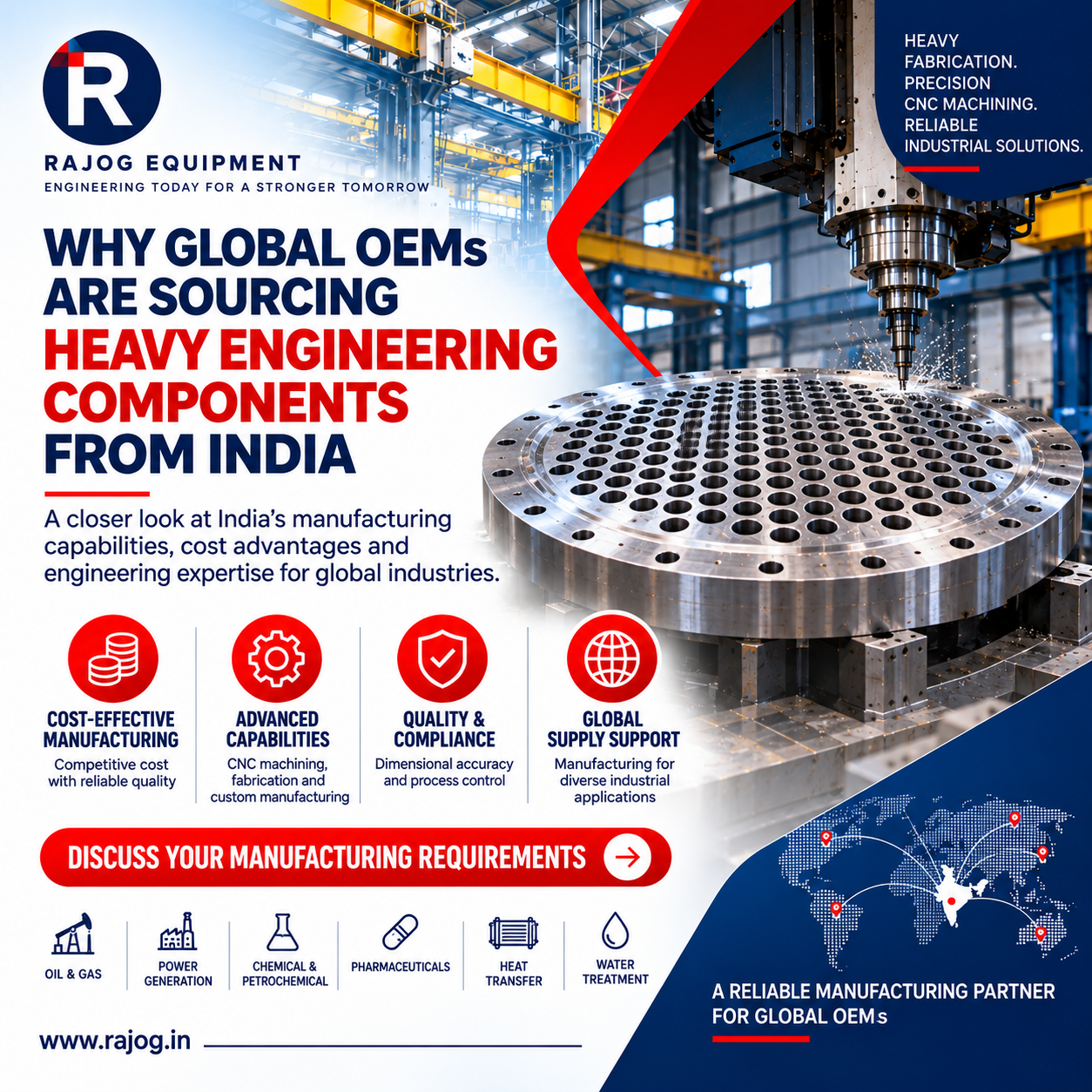
Rajog publishes capabilities that include CNC deep-hole drilling, CNC plano milling, floor boring and vertical turning. Its website lists tube sheet manufacturing up to 4,000 mm diameter and VTL capacity up to 20 tonnes. These published limits should be checked against the specific component drawing and manufacturing arrangement during technical review.

Custom Manufacturing Based on Engineering Drawings
Many OEM components are application-specific and cannot be selected from a standard catalogue. Drawing-based manufacturing allows the supplier to assess the component geometry, material, dimensions, machining operations, drilling patterns, fabrication details, forming requirements, tolerances and inspection points before production.
For an accurate feasibility review, buyers should provide the latest approved drawing revision and identify any project-specific standards or acceptance criteria. Any open technical points should be resolved before manufacturing begins. Learn more about technical drawing-based manufacturing and custom engineering components.
Integrated Manufacturing for Complex Industrial Components
Coordinate Fabrication, Forming and Machining
A heavy component may pass through several stages before completion. For example, a fabricated assembly may require plate cutting, rolling or pressing, fit-up, welding, dimensional checks and subsequent machining. The order of operations and machining allowances need to be considered during planning.
Where a supplier offers multiple relevant processes, buyers may benefit from simpler coordination between manufacturing stages. However, the scope should be confirmed clearly: identify the processes performed by the supplier, the subcontracted operations, inspection responsibilities and the documents delivered with the finished component. Review Rajog's manufacturing capabilities and heavy fabrication services.

Manufacturing Components for Global Industrial Applications
Heavy machined and fabricated components are used in a range of industrial applications. The component design and required manufacturing controls depend on the equipment and service conditions.
- Oil and gas: Pressure equipment and specialised fabricated or machined components, subject to project specifications.
- Heat transfer: Tube sheets, support plates and components used in heat exchangers.
- Desalination and water treatment: Custom components for process equipment and treatment systems.
- Pharmaceuticals and chemicals: Fabricated and machined components for process equipment.
- Power, steel, cement and fertilizers: Heavy industrial components and equipment assemblies.
International buyers can explore Rajog's tube sheet manufacturing, pressure vessel manufacturing and heavy engineering component manufacturing information.
Quality, Inspection and Technical Compliance
Quality requirements vary by component, material, end use and purchase specification. International buyers should define the inspection and test plan before production and confirm what records will be supplied.
- Material certificates and traceability, where specified.
- Dimensional inspection reports for critical features.
- Welding procedures, welder qualifications and weld inspection records, where applicable.
- Non-destructive testing requirements and acceptance criteria, where specified.
- Surface finish, coating or preservation requirements, where applicable.
- Third-party inspection hold points and release documentation, if required by the purchase order.
Do not assume that a supplier holds a particular certification or that every inspection method is included as standard. Confirm certifications, scope, validity and project-specific inspection arrangements directly with the manufacturer.
How to Choose the Right Heavy Engineering Manufacturer in India
Global buyers can evaluate a potential Indian manufacturing partner against the practical requirements below:
- Manufacturing capacity: Confirm machine working envelope, component weight handling, lifting capacity and process availability.
- Technical review: Check whether the supplier reviews drawings, material specifications, tolerances and inspection requirements before quoting.
- Relevant experience: Ask for examples of comparable component types and applications that the supplier is permitted to share.
- Quality arrangements: Review inspection plans, traceability, documentation and any required certifications.
- Production planning: Confirm capacity, manufacturing stages, critical milestones and realistic delivery schedules.
- Export readiness: Discuss packing, preservation, shipping documents, Incoterms, destination requirements and logistics responsibilities.
- Communication: Agree on technical query handling, drawing revisions, progress updates and approval procedures.
What to Include When Requesting a Manufacturing Quote
A clear RFQ helps the manufacturer understand the scope and prepare a more useful technical and commercial response. Where available, include:
- Latest engineering drawings with revision numbers.
- Material grade, applicable specifications and any approved alternatives.
- Component dimensions, approximate weight and required quantity.
- Machining features, tolerances, hole patterns and surface-finish requirements.
- Fabrication, welding, forming and heat-treatment requirements, if applicable.
- Inspection, testing, certification and documentation requirements.
- Delivery destination, required date, packing requirements and preferred Incoterms.
Why Consider Rajog for Heavy Engineering Component Manufacturing?
Rajog Equipment Pvt. Ltd. describes itself as a third-generation, family-run engineering business with a history dating to 1978. The company’s website presents capabilities in precision machining, heavy fabrication, pressure vessel manufacturing, tube sheet manufacturing, plate rolling, pressing and custom-engineered equipment.
Capabilities and capacities published on Rajog’s website include:
- Tube sheets up to 4,000 mm diameter.
- Plate rolling up to 200 mm thickness.
- Press forming up to 2,000 tonnes.
- Vertical turning capacity up to 20 tonnes.
- Fibre laser cutting with a published 6 kW system and stated cutting limits for specified materials.
- CNC deep-hole drilling, CNC plano milling and other heavy machining processes.
Rajog lists products and components including tube sheets, pressure vessels, dished ends, rolled shells, cones and reducers, support plates and heavy machined components. Manufacturing is described as being carried out to customer drawings and specifications, with inspection arrangements to be considered against the project requirements.
Rajog states that it serves industrial sectors in India, Europe and the Middle East. International buyers should contact the company to confirm the feasibility, applicable standards, production scope, export documentation and delivery arrangements for their specific requirement.
Conclusion
India can be a sourcing option for global OEMs and industrial buyers looking for heavy machined, fabricated and custom-engineered components. The best supplier is not selected by location or price alone. Buyers should verify that the manufacturer’s actual equipment, process capabilities, quality arrangements, material handling and delivery plan match the requirements in the drawing and purchase specification.
Rajog Equipment offers published capabilities across heavy machining, tube sheet manufacturing, fabrication, forming and pressure equipment components. International buyers with a defined requirement can share their drawings and specifications with Rajog for a technical and commercial review.
Key Takeaway
Successful global sourcing depends on matching the component’s technical requirements with a manufacturer’s verified capacity, quality processes, production planning and export arrangements. A detailed RFQ and early engineering review help buyers make a more informed supplier decision.