
Introduction
African EPC companies working across oil and gas, power, mining, chemicals, water treatment and industrial infrastructure often need components manufactured to project-specific drawings and specifications. India can be an attractive sourcing destination because its manufacturing ecosystem includes heavy fabrication, CNC machining, pressure equipment components, rolled shells, tube sheets, flanges, skids and other custom industrial products. Successful international sourcing, however, depends on selecting a manufacturer that fits the project—not simply choosing the lowest quotation.
Why African EPC Companies Consider India
Large industrial projects combine fabrication quality, machining accuracy, material control, inspection and reliable delivery. An integrated Indian manufacturer may be able to coordinate several operations within one supply chain, reducing interfaces between vendors. Depending on the manufacturer's verified capacity, requirements can include:
- Heavy fabricated structures and custom-engineered assemblies
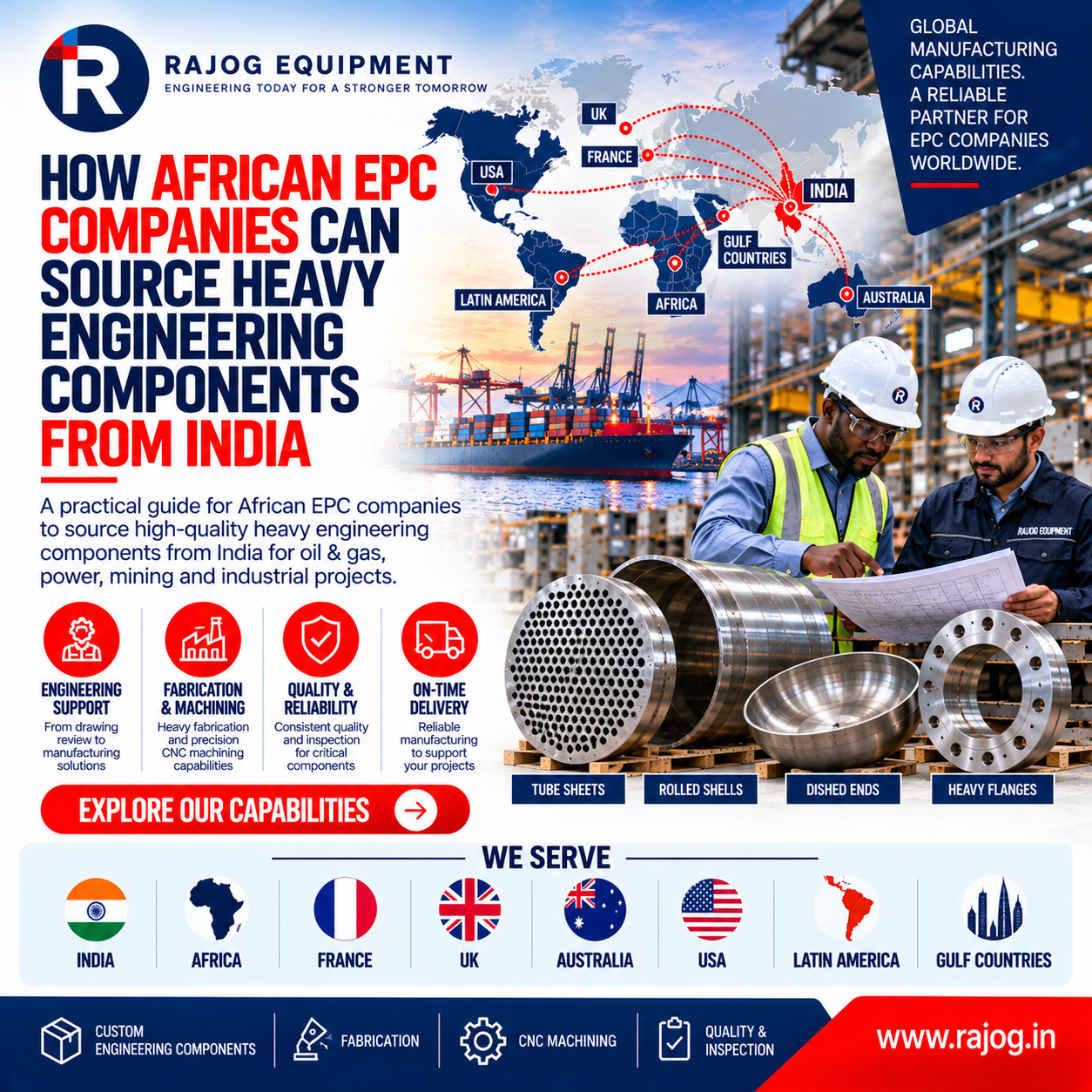
- Pressure vessel components, rolled shells and dished ends
- Tube sheets, heavy flanges and nozzles
- Skids, equipment supports and large machined components
1. Verify Manufacturing Capability
Before issuing an RFQ, confirm that the supplier can manufacture the component and handle it safely. Ask about maximum dimensions and weight, supported material grades, available fabrication processes, CNC machining capacity, lifting infrastructure and inspection facilities. Compare actual machine envelopes and handling limits with the drawing. A service list on a website is a starting point, not proof that a particular facility can meet the project requirement.
2. Request an Engineering and Drawing Review
International EPC drawings can specify tight tolerances, welding requirements, machining allowances, inspection points and extensive documentation. Ask the manufacturer to review the latest approved drawings before production and identify machining access, welding sequence, fabrication allowances, datum requirements, hole and bore details, material specifications and inspection needs. Early clarification can prevent avoidable changes during manufacturing.
3. Assess Fabrication and Machining Together
Heavy fabrication may involve plate cutting, rolling, forming, fit-up, welding and dimensional inspection. Evaluate plate thickness limits, fabrication dimensions, welding processes, material traceability, lifting arrangements and dimensional controls. Where machining follows fabrication, confirm that the supplier can machine the finished component and has a suitable plan for workholding, reference surfaces and allowances. For heavy components, machine capacity and safe workholding matter as much as nominal machining accuracy.
4. Agree Quality Records Before the Purchase Order
The required quality package depends on the project specification and approved inspection plan. It may include material certificates, dimensional inspection reports, welding records, NDT reports, inspection records, traceability documents and final quality documentation. Define deliverables, inspection stages, hold points and acceptance criteria in the RFQ and purchase order rather than assuming they are included.
5. Compare Total Landed Cost
A low manufacturing quotation may not be the lowest project cost. Compare manufacturing, inspection, export packaging, logistics, customs, handling and delivery risk together. A higher initial price may represent better value when it includes reliable quality control, complete documentation, fewer rejections and a predictable schedule. Make sure quotations use comparable technical assumptions and delivery terms.
6. Plan Export Packaging and Delivery Early
Discuss component dimensions and weight, packing method, lifting points, corrosion protection, shipping documents, delivery terms, port requirements and transportation limits before production is complete. Early planning helps identify route or handling constraints and gives the supplier time to prepare suitable export packaging.
African EPC Supplier Evaluation Checklist
Use a consistent scorecard to compare shortlisted manufacturers:
- Manufacturing: relevant fabrication and machining processes
- Capacity: maximum size, weight and material-handling limits
- Engineering: drawing review and manufacturability feedback
- Quality: inspection, traceability and project quality records
- Delivery: production plan, milestones and communication
- Logistics: export packing and shipping coordination