
Introduction
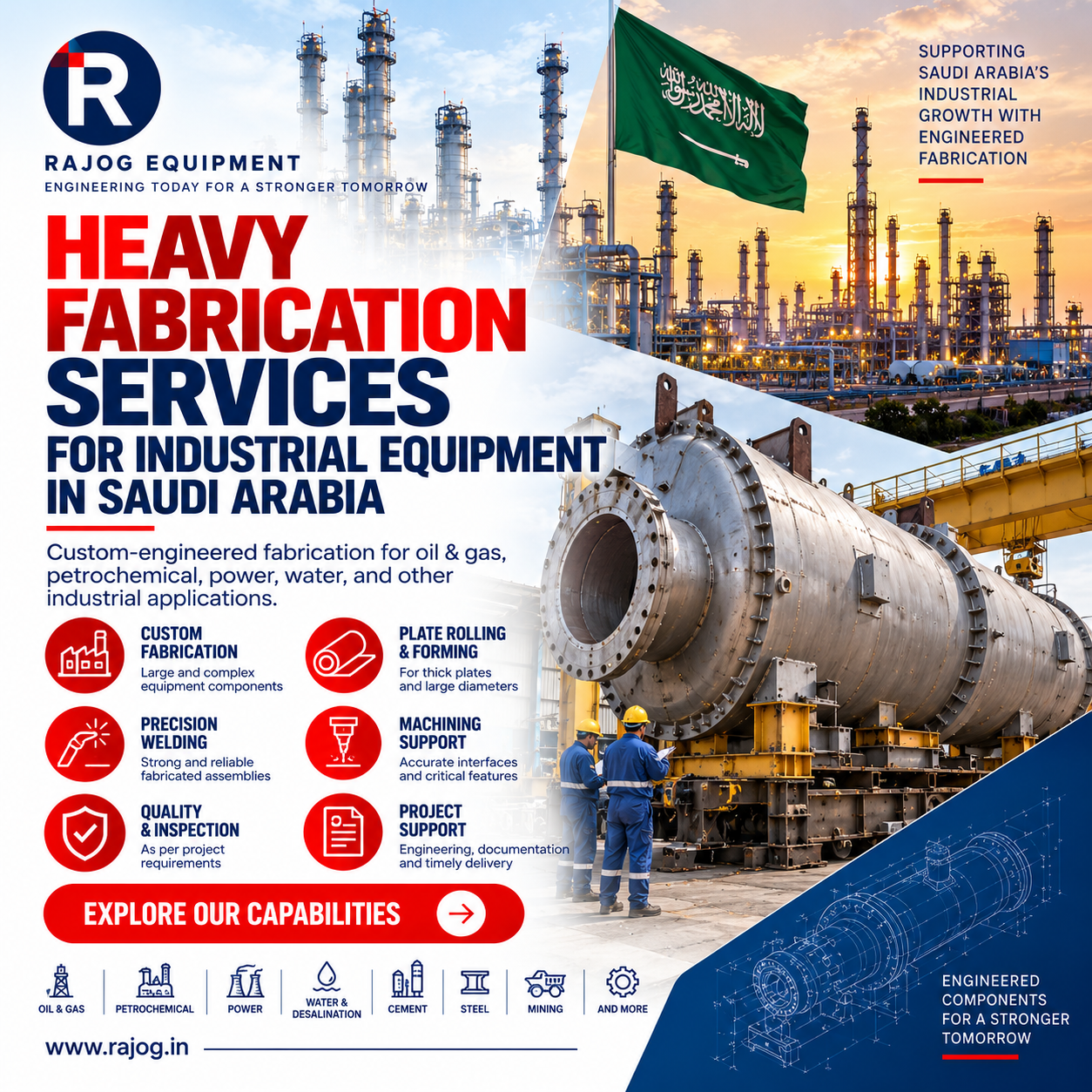
Saudi Arabia's industrial sector spans oil and gas, petrochemicals, power generation, water treatment, desalination, mining, cement, steel and other process industries. These sectors need equipment and components designed for demanding operating environments, large dimensions and project-specific engineering requirements. Heavy fabrication is an important part of manufacturing that equipment. It can involve thick metal, large assemblies, forming, rolling, welding and subsequent machining or inspection. Choosing a supplier therefore means looking beyond the quotation: buyers need to assess engineering, materials, dimensions, welding, quality requirements and schedule. This guide explains what to consider when sourcing heavy fabrication services for industrial equipment in Saudi Arabia.
What Is Heavy Fabrication?
Heavy fabrication is the manufacture of large or heavy-duty metal components and assemblies using processes such as plate cutting, forming, bending, rolling, press forming, welding, assembly, machining and inspection. The right sequence depends on the component design and engineering requirements. Applications can include structural assemblies, equipment components, fabricated shells, pressure-equipment components and other custom industrial products. The goal is not simply to join metal pieces; the finished component must meet its approved engineering drawing and applicable quality requirements.
Why Heavy Fabrication Matters for Saudi Industrial Projects
- Oil and gas: fabricated equipment and components for processing, storage and supporting infrastructure.
- Petrochemicals: engineered components manufactured to project specifications.
- Power generation: large structural and equipment-related fabricated components.
- Water treatment and desalination: equipment and components designed for specific process requirements.
- Cement, steel and heavy engineering: robust structures, custom machinery and large industrial assemblies.
Key Heavy Fabrication Processes
A typical manufacturing plan may include plate preparation, cutting, forming or rolling, welding and assembly, followed by machining and inspection where the design requires them. Each step affects the next, so the sequence should be reviewed against the drawing and project requirements before production starts.
Plate Cutting and Rolling
Fabrication often begins by preparing plates to the engineering drawing. Cutting accuracy matters because it influences later forming, welding and assembly. Plate rolling converts flat plate into cylindrical or curved sections. The plan should account for plate thickness, material, required diameter and length, forming requirements and dimensional inspection.
Forming and Press Operations
Some component geometries require controlled forming rather than cutting and welding alone. Press forming can be used when the design calls for controlled deformation; the operation should follow the engineering specification and account for the material and finished geometry.
Welding
Welding joins fabricated components into larger assemblies. Depending on the project, requirements may cover welding procedures, joint preparation, welding sequence, preheating where specified, dimensional control and inspection. The appropriate process depends on the material, design and approved manufacturing requirements.
Machining After Fabrication
Some fabricated components need precision machining after welding and assembly to produce features such as mounting faces, accurate holes, bores, interfaces or finished surfaces. Plan fabrication and CNC machining together so the design, machining allowances and sequence are considered before production. Buyers can explore Rajog Equipment’s manufacturing capabilities.
What Buyers in Saudi Arabia Should Check
A technical review before placing an order helps confirm that the supplier, facility and manufacturing plan suit the component and project specification.
1. Component Size, Weight and Handling
- Maximum fabrication dimensions and plate thickness
- Component weight, lifting points and handling equipment
- Crane capacity and workshop space
- Machining capacity when post-fabrication machining is required
2. Fabrication Equipment
Check that the facility has suitable cutting, plate rolling, press forming, welding, heavy machining and material-handling equipment for the specified operations. Confirm the working capacity against the actual dimensions, thickness and weight rather than relying on general capability claims.
3. Engineering Drawing Review
Before production, review materials, dimensions, tolerances, welding details, machining allowances, inspection criteria and assembly requirements. Resolving questions early can reveal manufacturing issues before material is cut or formed.
4. Welding, Inspection and Quality Requirements
Define welding and inspection requirements before production. Depending on the project specification, inspection may include dimensional checks and applicable non-destructive testing. Agree the inspection plan and acceptance criteria with the supplier for the specific project.
5. Material Traceability and Documentation
Clarify whether the project requires material certificates, heat-number tracking, material identification, inspection records or final manufacturing documentation. Agree on the required records before production begins.
Common Heavy Fabrication Problems and How to Prevent Them
Welding distortion can change the dimensions of large assemblies. Plan the welding sequence, fixtures, dimensional checks and machining allowances before production. Insufficient machining allowance can make final machining difficult, so identify machined interfaces during the engineering review. Oversized components can also create handling constraints; confirm weight, lifting points and available equipment in advance. Finally, define inspection checkpoints and documentation early to reduce rework and delays.
Illustrative Case Study: A Heavy Fabricated Industrial Assembly
Consider a hypothetical industrial project in which an equipment manufacturer needs a large fabricated steel assembly for a process application in Saudi Arabia. This illustrative scenario does not represent a verified customer project. The assembly includes large steel plates, formed sections, welded joints, controlled overall dimensions, precision-machined interfaces and final dimensional inspection. The main structure can be fabricated, but some interfaces need machining, and welding-related dimensional variation must be considered before final machining.
A Coordinated Manufacturing Sequence
- Engineering review
- Material preparation
- Plate cutting
- Forming or rolling
- Welding and assembly
- Dimensional inspection
- CNC machining of required interfaces
- Final inspection
- Dispatch
Key Lesson from the Example
The example shows why heavy fabrication and machining may need to be planned together. Fabrication creates the main structure, while machining can provide the precision features needed for assembly.
Why Consider an Integrated Fabrication Approach?
- Better manufacturing coordination: engineering requirements can be considered across the complete production sequence.
- Reduced rework risk: machining allowances and critical dimensions can be identified before fabrication.
- Improved dimensional control: critical interfaces can be machined and inspected to approved requirements.
- Simpler project coordination: where capabilities are available in one workflow, handoffs between production stages may be easier to manage.
How to Choose a Heavy Fabrication Partner
- Technical capability: can the supplier manufacture the required size, thickness and complexity?
- Equipment: are the cutting, forming, rolling, welding and machining capabilities suitable?
- Quality: how are welds, dimensions, materials and finished components inspected?
- Engineering support: can the supplier review drawings and identify manufacturing requirements before production?
- Handling: can the facility safely move and support the component?
- Delivery and documentation: can the supplier meet the schedule and provide the agreed manufacturing records?
What to Include in a Heavy Fabrication RFQ
- Engineering drawings and drawing revision
- Material specifications and plate thickness
- Component dimensions and estimated weight
- Fabrication and welding requirements
- Machining requirements and allowances
- Inspection criteria and applicable standards
- Quantity, delivery requirements and destination
- Documentation requirements
Final Thoughts
Heavy fabrication supports industrial equipment and engineered components across Saudi Arabia’s oil and gas, petrochemical, power, water treatment, desalination, cement, steel and heavy engineering sectors. Buyers should evaluate equipment capacity, engineering support, fabrication and welding capability, machining, inspection, material handling, documentation and delivery rather than treating fabrication as an isolated process. A structured supplier evaluation can help reduce manufacturing risk and support smoother project execution. For heavy engineering and fabrication requirements, explore Rajog Equipment’s manufacturing capabilities.