
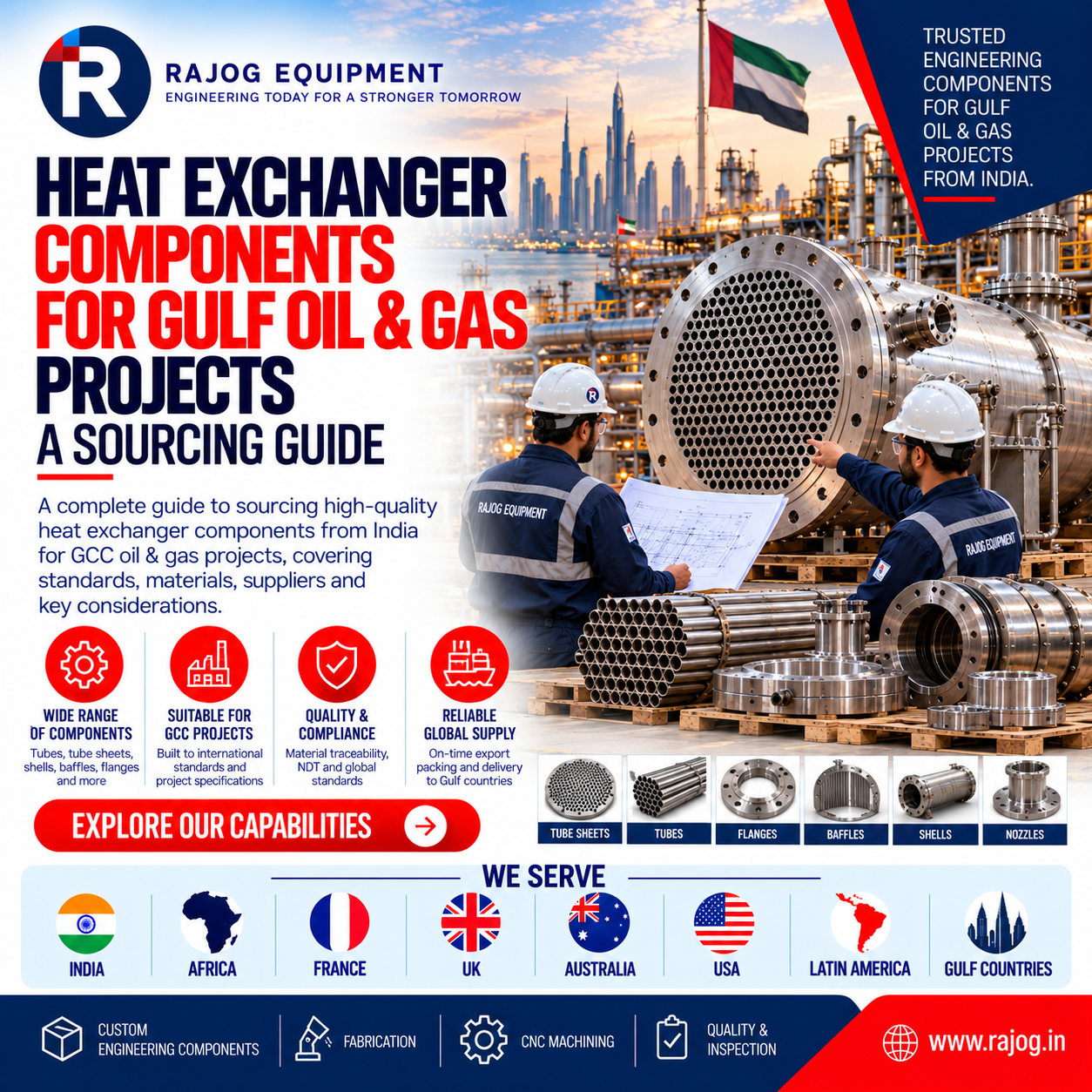
Introduction
Heat exchangers are widely used in oil and gas, petrochemical, power, desalination and process industries across the Gulf. For EPC contractors and equipment manufacturers, sourcing critical heat exchanger components requires careful attention to material, dimensions, machining accuracy, inspection and documentation. Indian heavy engineering manufacturers may be considered when their verified capabilities align with the project’s technical requirements.
Key Heat Exchanger Components
Depending on the equipment design, procurement may include tube sheets, shell components, rolled shells, dished ends, nozzles, flanges, supports and custom fabricated or machined components. Confirm the supplier’s capacity for the specific size, material and process requirements of each part.
Tube Sheets: A Critical Component
Tube sheets require accurate diameter and thickness, a controlled hole pattern and tube-hole dimensions, suitable facing, flatness and surface finish. For large heat exchangers, manufacturing capacity and heavy machining infrastructure become particularly important. Agree the hole-pattern inspection method and acceptance criteria before production.
Shell Components and Material Selection
Shell components may require plate cutting, rolling, welding, dimensional inspection and machining of interfaces. Plan the fabrication sequence to control distortion and maintain required dimensions. Gulf oil and gas projects may involve demanding operating conditions, so clearly specify material grade, thickness, design requirements, corrosion considerations, heat treatment and inspection requirements. Material selection must follow the approved engineering specification.
Inspection and Documentation
Define inspection requirements before manufacturing. Depending on the project, these may include material verification, dimensional inspection, welding inspection, NDT, surface inspection, final inspection reports and traceability documents. The project specification and approved inspection plan determine the exact scope and acceptance criteria.
Questions to Ask a Supplier
Before selection, ask whether the manufacturer can:
- Manufacture the required component dimensions and weight
- Provide suitable machining, drilling and fabrication equipment
- Handle and position large components safely
- Perform or coordinate the specified inspection
- Supply the required documentation and traceability records
- Commit to a realistic production lead time and export packing plan
Common Sourcing Challenges
Dimensional deviations
Use controlled fabrication, machining and inspection stages, with tolerances and measurement methods agreed before production.
Poor tube-hole accuracy
Specify the hole pattern and require a controlled drilling and verification plan.
Documentation gaps
Define the quality dossier and required records before the purchase order is released.
Delivery uncertainty
Establish manufacturing milestones and inspection hold points, then monitor progress against the agreed schedule.