
Introduction
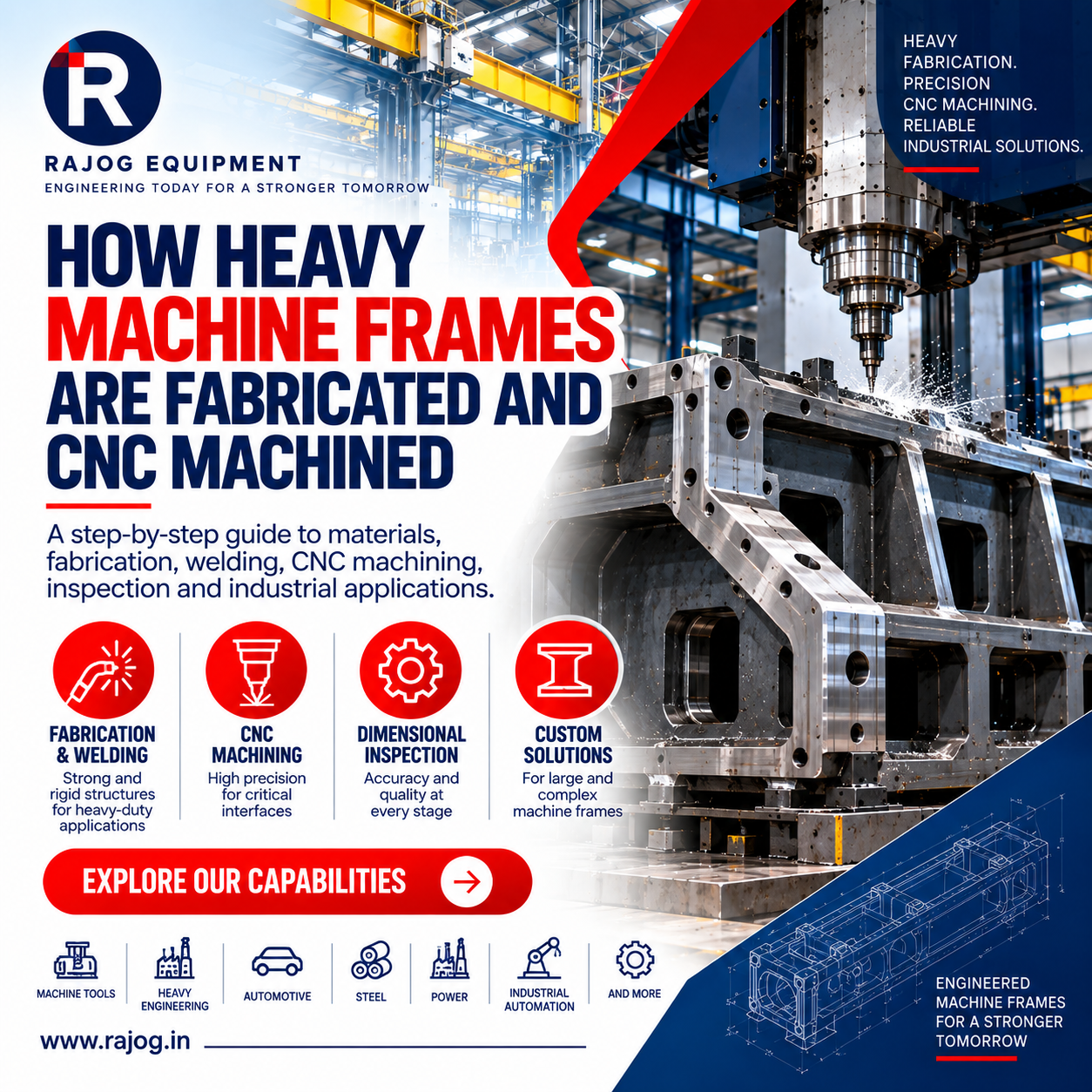
Heavy machine frames form the structural foundation of many industrial machines and equipment systems. They support major components, maintain alignment, distribute operating loads and provide the rigidity required for reliable machine performance. Unlike small machine structures, heavy machine frames may involve large steel plates, stiffeners, ribs, mounting surfaces, machined reference areas, holes, slots and other precision interfaces. Manufacturing these frames therefore requires more than basic fabrication. The process often involves engineering review, material preparation, plate cutting, fit-up, welding, stress management, dimensional inspection, CNC machining and final quality checks. A well-planned combination of fabrication and CNC machining helps manufacturers achieve both structural strength and the dimensional accuracy required for industrial equipment.
What Is a Heavy Machine Frame?
- A structural assembly designed to support and connect major components of industrial machinery.
- May include heavy steel plates, structural members, reinforcement ribs, stiffeners and mounting plates.
- Can incorporate machined reference surfaces, bolt holes, slots, bearing interfaces, equipment mounting points and guide surfaces.
- Must withstand operating loads while maintaining the required geometry and alignment.
- Rigidity, dimensional stability, welding quality and machining accuracy are key manufacturing considerations.
Why Are Heavy Machine Frames Important?
- Structural rigidity: a rigid frame helps support heavy equipment and resist deformation during operation.
- Component alignment: critical mounting and reference surfaces must maintain the required relationship between machine components.
- Load distribution: the frame distributes operating loads across the structure instead of concentrating them in specific areas.
- Vibration control: a properly designed and manufactured frame provides structural stability for equipment operating under dynamic loads.
- Equipment reliability: poor dimensional control or structural distortion can affect assembly, alignment and long-term machine performance.
Materials Used for Heavy Machine Frames
Material selection depends on the equipment design, loading conditions, dimensions, manufacturing method and project requirements. Structural steel is commonly considered for fabricated frames because it can provide the required strength while being suitable for cutting, forming, welding and machining. Large frames are often manufactured as welded steel assemblies made by joining multiple plates and structural sections, particularly when a component is too large or complex to produce as a single piece. Cast materials may be selected for certain designs that require specific structural or vibration characteristics. The appropriate material should be chosen against the engineering requirements rather than component size alone.
Heavy Machine Frame Fabrication Process
Manufacturing a heavy machine frame generally involves several interconnected stages. Planning machining allowances, welding sequence, access and inspection points early helps each stage support the final dimensional requirements.
1. Engineering and Drawing Review
- Review overall dimensions, material specifications and plate thicknesses.
- Identify mounting locations, critical dimensions, tolerances and surface-finish requirements.
- Confirm welding requirements, machining requirements and inspection requirements.
- Plan machining allowances, welding sequence, access requirements and inspection points before fabrication.
2. Material Preparation
Prepare the required plates and structural materials according to the approved drawings and material specifications. Where project requirements call for it, maintain material identification and traceability throughout production. Proper material preparation helps reduce fabrication errors later in the process.
3. Plate Cutting
- Cut heavy plates to the required dimensions and component geometry.
- Carry out edge preparation, cleaning, marking and dimensional verification as needed.
- Identify individual components so they can be assembled against the correct drawing details.
- Control cutting accuracy because errors at this stage can affect fit-up and final dimensions.
4. Fit-Up and Assembly
- Position and align individual components according to the engineering drawings.
- Check overall geometry, component alignment and joint preparation.
- Plan welding sequence, machining allowance, accessibility and reference points.
- Accurate fit-up can help reduce distortion and dimensional problems during welding.
5. Welding
Welding is one of the most important stages in heavy machine frame fabrication. Large welded structures can experience distortion and residual stresses because of the heat introduced during welding. A controlled approach may include proper joint preparation, a planned welding sequence, controlled heat input, appropriate fixtures where required, intermediate dimensional checks and inspection of welded joints. The welding procedure should be established according to the material, design, applicable project requirements and approved procedures.
6. Stress Management
Welding can introduce residual stresses into fabricated structures. Depending on the material, design, component size and project requirements, stress-relief methods may be considered before precision machining. This is particularly important when the frame contains critical machined surfaces where dimensional stability is required. Stress management should be considered during the planning stage rather than only after fabrication is complete.
7. Dimensional Inspection After Fabrication
- Check overall dimensions, flatness, squareness and alignment.
- Verify mounting locations, reference points and machining allowances.
- Identify dimensional problems before CNC machining to prevent unnecessary machining time and material loss.
CNC Machining of Heavy Machine Frames
Fabrication creates the structural frame, but certain surfaces may require much higher dimensional accuracy. Depending on the design, CNC machining may be used for mounting faces, reference surfaces, bores, holes, slots, bearing seats, guide surfaces, equipment interfaces and precision mounting locations. The machining process should be planned around the final dimensional requirements of the machine.
Why CNC Machining Is Important
Fabricated surfaces may not always achieve the dimensional accuracy required for critical machine interfaces. CNC machining allows specific surfaces and features to be machined according to defined dimensions and tolerances. For heavy machine frames, machining planning must also consider component size and weight, workholding, machine capacity, accessibility, tool reach, component rigidity, datum references and required tolerances.
Fabrication and CNC Machining: Why Both Are Needed
- Fabrication provides the structural form.
- CNC machining provides precision to critical interfaces.
- A typical sequence is engineering review, material preparation, plate cutting, fit-up, welding, stress management if required, fabrication inspection, CNC machining, dimensional inspection and final inspection.
- An integrated approach can reduce coordination problems between separate manufacturing stages.
Common Manufacturing Problems and Possible Solutions
- Welding distortion: heat can distort large structures. Use controlled welding sequences, appropriate fit-up methods, fixtures where necessary and intermediate dimensional checks.
- Incorrect machining allowance: insufficient material can make the final dimension difficult or impossible to achieve. Consider machining requirements during initial engineering and fabrication planning.
- Alignment issues: poor fit-up or uncontrolled movement can affect mounting and reference surfaces. Use controlled fit-up procedures and dimensional checks before precision machining.
- Difficulty handling heavy components: plan lifting points, crane capacity, shop access, component orientation and machining accessibility before production.
- Dimensional changes after welding: thermal effects and residual stresses can move the structure. Allow suitable machining stock, inspect after fabrication and consider stress-management methods where required.
Illustrative Case Study: Fabrication and CNC Machining of a Heavy Machine Frame
The following is an illustrative manufacturing example, not a claim about a specific Rajog customer project.
Example Manufacturing Stages
- Engineering review: review drawings, dimensions, material specifications, machining requirements, tolerances and inspection points.
- Material preparation: prepare and identify required plates according to project requirements.
- Cutting: cut plates to the required dimensions and prepare them for assembly.
- Fit-up: position the individual components and check alignment before welding.
- Welding: weld the frame using a planned sequence to control distortion.
- Dimensional inspection: verify overall geometry and available machining allowance.
- Stress management: consider suitable measures before precision machining where required by the design and project requirements.
- CNC machining: machine critical mounting faces, reference surfaces, holes, slots or other precision interfaces to the drawing.
- Final inspection: check dimensional accuracy and compliance with specified requirements.
Applications of Heavy Machine Frames
- Machine tools: frames support machining systems, drives, guides and other machine components.
- Heavy engineering: large industrial equipment may require rigid structural frames capable of supporting substantial loads.
- Steel industry: machine frames can form part of processing and material-handling equipment.
- Power industry: industrial machinery used in power-related applications may require heavy structural assemblies.
- Automotive manufacturing: production equipment and specialized machinery can require rigid fabricated and machined frames.
- Industrial automation: large automation systems may need custom frames for mounting mechanical and electrical equipment.
How to Choose a Heavy Machine Frame Manufacturer
- Fabrication capability: check whether the manufacturer can handle the required component dimensions, plate thicknesses and structural complexity.
- Welding capability: review welding processes, procedures, inspection practices and experience with large welded structures.
- CNC machining capacity: confirm the component size and weight can be accommodated while meeting machining requirements and tolerances.
- Material handling: verify suitable lifting, movement, positioning and handling infrastructure.
- Inspection capability: confirm dimensional inspection is performed at appropriate production stages.
- Engineering support: assess whether the manufacturer can review drawings and identify fabrication or machining concerns early.
- Integrated manufacturing: a supplier that coordinates fabrication and machining can simplify project management and reduce communication gaps.
What Information Should You Include in an RFQ?
- Engineering drawings and material specification
- Overall dimensions and approximate component weight
- Plate thickness and welding requirements
- Machining requirements and dimensional tolerances
- Surface-finish and inspection requirements
- Quantity, delivery location and required delivery schedule
- A detailed RFQ allows manufacturers to evaluate the project more accurately.
Heavy Machine Frames: Fabrication vs. CNC Machining
- Structural assembly: fabrication.
- Plate joining and welding: fabrication.
- Large structural geometry: fabrication.
- Precision mounting surfaces, holes, bores, slots and reference surfaces: CNC machining.
- Final dimensional accuracy: fabrication establishes the structure; CNC machining provides precision on specified interfaces.
- In many heavy engineering applications, both processes are required rather than choosing one over the other.
Quality Control Considerations
- Before fabrication: review drawings, verify material and dimensions, and check machining allowances.
- During fabrication: inspect fit-up and welding, perform dimensional checks and monitor distortion.
- Before machining: inspect overall dimensions, flatness, alignment and machining allowance.
- After machining: inspect critical dimensions, holes, bores, surfaces and final dimensions.
- Staged checks help identify problems before they become more expensive to correct.
Key Factors That Affect Manufacturing Cost
- Material grade and quantity
- Overall dimensions, component weight and plate thickness
- Fabrication complexity and welding requirements
- Machining requirements and required tolerances
- Inspection and handling requirements
- Quantity and delivery schedule
- Comparing suppliers purely on quoted price may not provide a complete picture of the manufacturing scope.
Benefits of an Integrated Fabrication and Machining Approach
- Better process coordination: fabrication and machining requirements can be considered together.
- Reduced communication gaps: technical information does not need to move between multiple unrelated suppliers.
- Better dimensional control: fabrication inspection can be completed before precision machining begins.
- Simplified project management: a coordinated workflow can reduce the number of supplier interfaces.
- Improved production planning: machining allowances, handling requirements and inspection stages can be planned earlier.
Conclusion
Heavy machine frames are critical structural components in many industrial machines and equipment systems. Their manufacture requires coordination between engineering, material preparation, cutting, fit-up, welding, stress management, dimensional inspection and CNC machining. Fabrication creates the structural strength of the frame, while CNC machining provides the precision required for critical mounting and interface surfaces. Common challenges include welding distortion, dimensional movement, machining allowances, alignment, component handling and inspection. Addressing these factors early can improve manufacturing efficiency and reduce costly rework. The right manufacturing partner should have suitable heavy fabrication capability, CNC machining capacity, material handling infrastructure, inspection processes and engineering support. For industrial buyers looking for fabrication and machining support, explore Rajog Equipment’s manufacturing capabilities.