
Introduction
Process industries across the Gulf need large and complex components for equipment used in oil and gas, petrochemical, chemical, power, water treatment, desalination, steel, cement and other applications. Components may be manufactured to detailed engineering drawings with specific material, dimensional, fabrication, machining and inspection requirements. Selecting a heavy engineering manufacturing partner is therefore an important project decision.
What Does Heavy Engineering Manufacturing Include?
Depending on the component and project specification, heavy engineering manufacturing can involve heavy fabrication, plate cutting and rolling, press forming, welding, CNC machining, deep-hole drilling, VTL machining, assembly and dimensional inspection. Buyers should define the required manufacturing route and qualify the supplier for the processes actually in scope.
Common Components for Gulf Process Industries
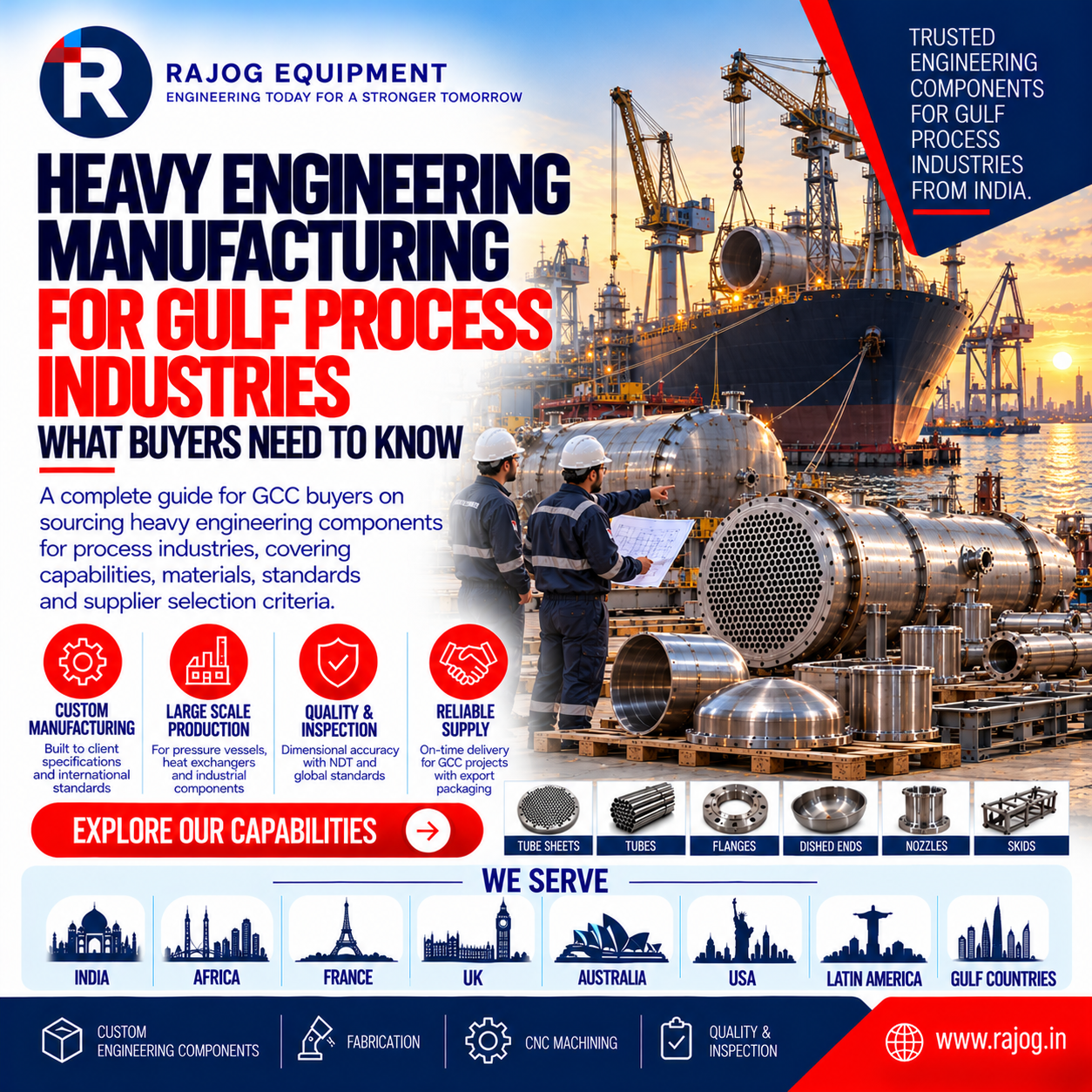
Project requirements may include tube sheets, pressure vessel components, rolled shells, dished ends, heavy flanges, nozzles, skids, equipment supports, machine bases and large machined components. Confirm whether the manufacturer has relevant experience and equipment for the dimensions, weight and material involved.
1. Check Manufacturing Capacity
Start by confirming whether the manufacturer can physically handle the component. Evaluate maximum dimensions and weight, machine envelope, crane capacity, fabrication area and material-handling arrangements. Ask how components are moved between manufacturing stages and into inspection and dispatch areas.
2. Assess Fabrication and Machining Capability
Fabrication quality affects downstream machining and assembly. Review controls for cutting, forming, fit-up, welding and dimensional checks. For machining, check CNC, boring, VTL, drilling, deep-hole drilling, face machining and precision-interface capacity against the drawing. Where both fabrication and machining are required, assess their coordination as one manufacturing plan.
3. Verify Quality and Engineering Support
Quality should be integrated from material through fabrication, machining, inspection and documentation—not treated only as final inspection. Depending on project requirements, buyers may need material certificates, dimensional reports, NDT records, welding documentation and final inspection records. Ask the supplier to review manufacturing sequence, machining allowance, weld accessibility, distortion risks, datum strategy and inspection points before production.
4. Plan Delivery and Monitor Milestones
Heavy components require longer planning cycles than standard products. Establish milestones for material procurement, fabrication, machining, inspection, packing and dispatch. Agree how progress, technical clarifications, inspection dates and documentation status will be communicated.
Supplier Evaluation Questions
Before selecting a manufacturer, confirm:
- Has the supplier manufactured similar components?
- Can its machines, cranes and shop handle the required dimensions and weight?
- What fabrication, machining and inspection equipment is available?
- How are material traceability and dimensional inspection controlled?
- What quality records and documentation can be provided?
- How are production milestones and delivery monitored?
Why Integrated Manufacturing Can Help
Conclusion
For Gulf process industries, heavy engineering should be evaluated as a complete supply-chain capability. The right partner combines manufacturing infrastructure, engineering support, quality control, capacity, documentation and delivery planning.