
Introduction
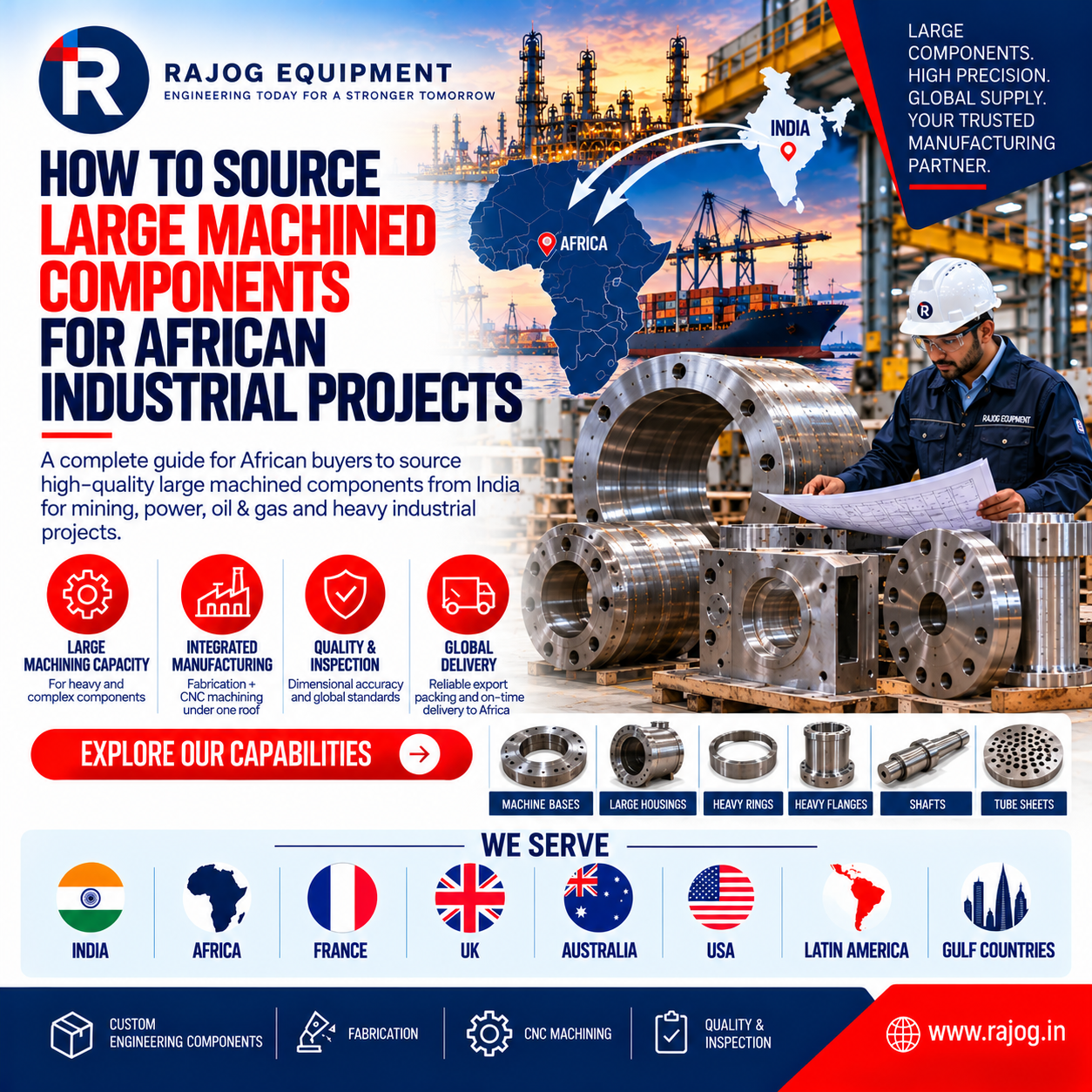
Large machined components are used in mining, power generation, oil and gas, steel, cement, process industries and heavy equipment manufacturing. For African industrial projects, international sourcing involves more than checking machining accuracy. Component dimensions, weight, workholding, material handling, inspection, packaging and transportation all affect successful delivery. India can be considered when a manufacturer’s equipment and infrastructure match the actual requirement.
What Are Large Machined Components?
These are industrial parts whose size, weight, geometry or machining scope demands substantial machine capacity. Examples include heavy flanges, tube sheets, machine bases, heavy rings, large equipment components, fabricated and machined assemblies, structural interfaces and other custom industrial components.
1. Define Component Dimensions and Critical Features
Before contacting suppliers, prepare the overall dimensions, maximum diameter, height, weight, material, critical dimensions, tolerances and surface-finish requirements. Include the latest drawing and identify the features that control assembly or function. These details help a manufacturer assess capacity and identify technical questions before quoting.
2. Match the Requirement to Machine Capacity
Ask about maximum machining diameter, component weight, machine travel, boring and turning capability, drilling capability, VTL capacity and available workholding. Compare the machine envelope with the complete component—not only the finished feature. Confirm that the component can be installed, positioned, machined and removed safely.
3. Check Material-Handling Infrastructure
Large components move between fabrication, machining, inspection and dispatch. Ask about heavy-duty cranes and lifting equipment, workshop space, loading areas and component-positioning arrangements. Handling needs should be understood before production begins, especially where components are heavy fabricated and machined assemblies.
4. Complete an Engineering Review
Review machining allowances, datums, critical surfaces, tool accessibility, workholding, hole locations and inspection requirements before machining starts. For fabricated components, align fabrication and machining plans so that allowances and reference surfaces remain suitable after welding and any required stabilization.
5. Establish Inspection Requirements
Depending on the design, dimensional inspection may cover diameter, flatness, concentricity, bore dimensions, hole locations, surface finish and overall geometry. Agree measurement methods, acceptance criteria and records before production so that the supplier and buyer share the same inspection basis.
Common Sourcing Problems and Practical Controls
The component does not fit the machine
Confirm the machine envelope, component weight, access and workholding arrangement before order acceptance.
Machining areas are difficult to access
Review tool access, setup and component orientation during manufacturing planning.
Handling causes production delays
Plan lifting, movement between process areas and loading requirements before production starts.
Shipping constraints emerge late
Assess dimensions, weight, packaging and the transportation route before dispatch planning is finalized.
Large Machined Component Supplier Checklist
A suitable supplier should demonstrate:
- Large CNC machining capacity matched to the drawing
- Heavy component handling and workholding arrangements
- Engineering review and fabrication support where required
- Dimensional inspection and quality documentation
- Production planning and export packing capability