
Introduction
Oil and gas projects across Africa use pressure equipment and components designed for demanding operating conditions. For EPC companies, equipment manufacturers and procurement teams, sourcing these items requires close attention to material selection, fabrication quality, dimensional accuracy, inspection, documentation and project specifications. Indian heavy engineering manufacturers may be considered when their verified capabilities match the technical and quality requirements.
Common Pressure Vessel Components
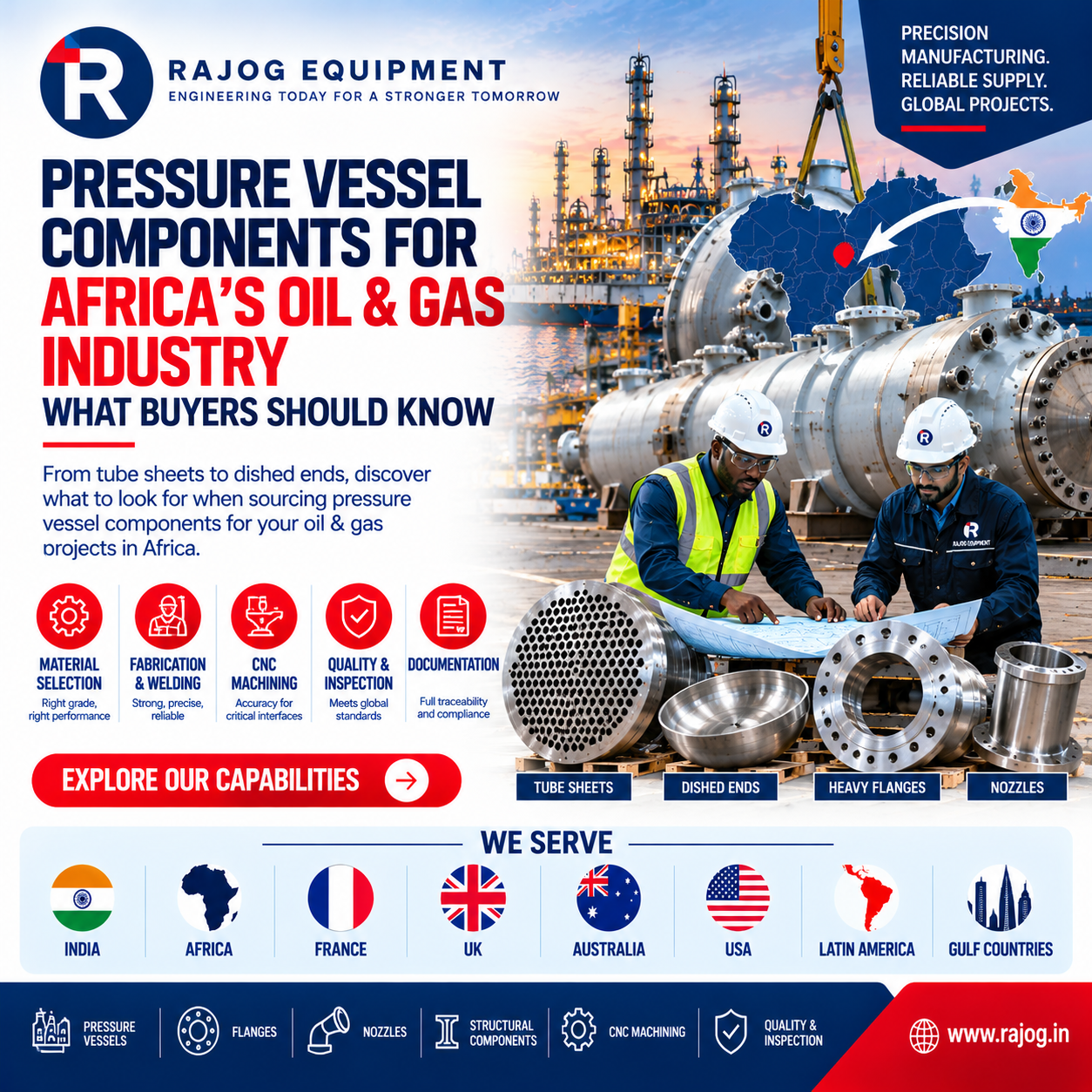
Depending on vessel design, industrial buyers may procure tube sheets, rolled shells, dished ends, nozzles, heavy flanges, support structures, skids and custom fabricated components. Each item has distinct manufacturing, dimensional and inspection requirements, so buyers should qualify the supplier against the actual scope rather than a general product category.
1. Define Material Requirements
Specify the required material grade, thickness, mechanical requirements, operating temperature, corrosion considerations, heat-treatment requirements and material certification. The manufacturer should work to approved drawings and project specifications. Any proposed substitution or deviation should be reviewed and approved through the project’s formal process before manufacture.
2. Evaluate Fabrication Capability
Pressure vessel components may involve plate cutting, forming, rolling, fit-up, welding, nozzle fabrication, dimensional inspection and machining. Confirm that the supplier can meet the specified dimensions and thicknesses, has relevant processes and can manage large components safely. Discuss material identification, fabrication controls, lifting and handling infrastructure as part of qualification.
3. Review Machining Requirements
Some components require precision machining after fabrication. Typical features include flange faces, nozzle interfaces, tube sheets, bores, mounting surfaces, drilled holes and reference surfaces. When fabrication and machining are coordinated by one supplier, project teams may simplify manufacturing handoffs; the buyer should still verify each process, its capacity and the interface controls.
4. Agree Quality and Inspection Requirements
Define inspection at the beginning of procurement. Depending on the project, it may include visual and dimensional inspection, material verification, welding inspection, NDT, surface inspection and final documentation review. The approved inspection plan and applicable project standards determine the exact scope. Identify hold and witness points and required records before the purchase order is released.
Common Procurement Risks and How to Reduce Them
Incomplete documentation
List required certificates, inspection reports, traceability records and dossier format before ordering, then track submissions against agreed milestones.
Fabrication distortion
Agree fabrication procedures, dimensional checks and stress-management practices where required by the design and specification.
Machining interface problems
Review machining allowances, datums and finished interfaces before production to avoid leaving insufficient material for final machining.
Delivery risk
Set milestone-based production and inspection schedules, including material procurement, fabrication, machining, final inspection and dispatch.
How to Evaluate an Indian Supplier
Use a documented qualification process and check the supplier’s:
- Heavy fabrication and precision machining capability
- Component size, weight and material-handling capacity
- Inspection infrastructure and quality documentation controls
- Engineering support and relevant manufacturing experience
- Production capacity, communication and schedule management
- Export packaging and logistics planning
Pressure Vessel Component RFQ Checklist
Before requesting a quotation, provide component drawings, material specifications, quantities, welding and machining requirements, inspection and documentation requirements, delivery location and required schedule. A complete RFQ helps suppliers identify assumptions and submit more accurate technical and commercial proposals.