
Introduction
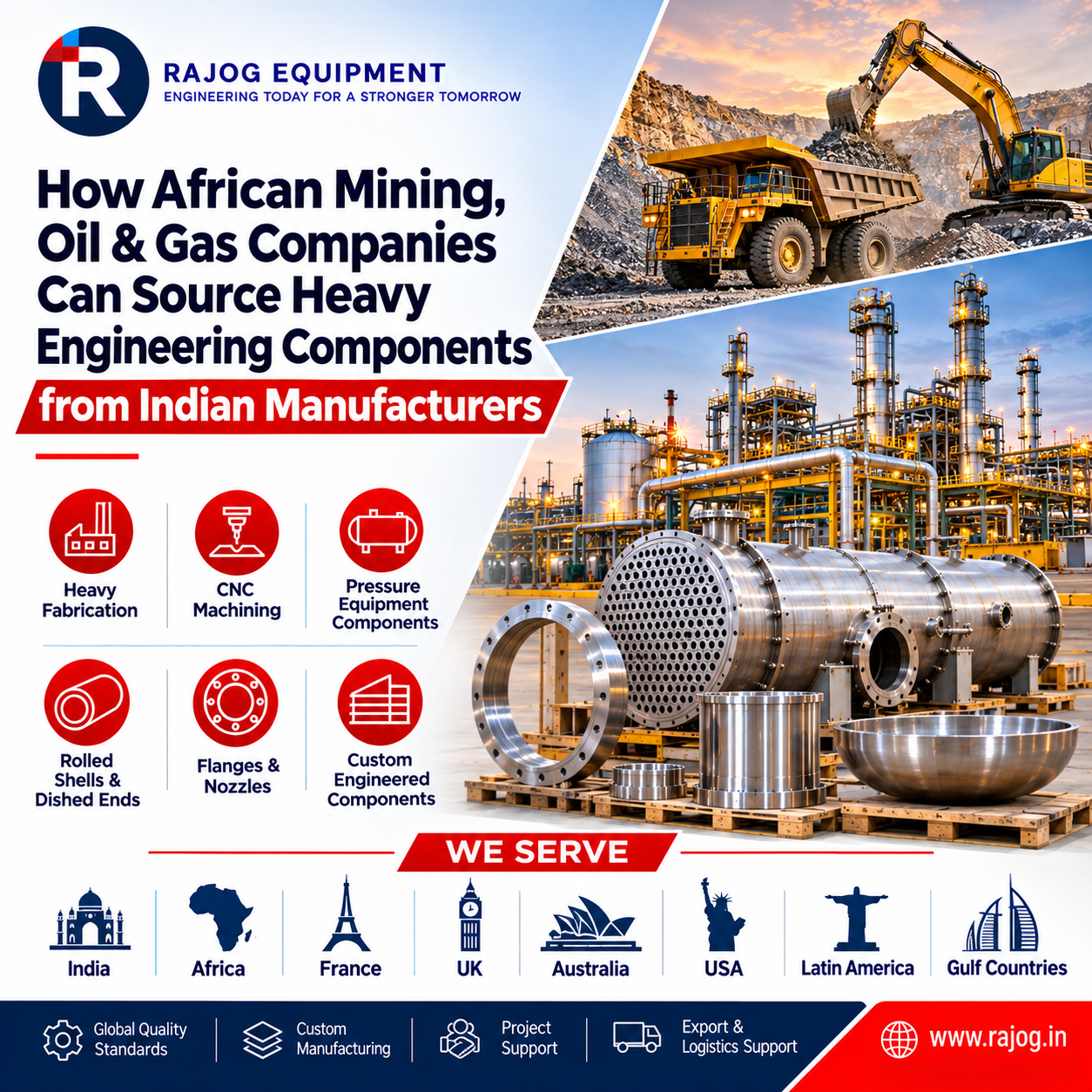
Mining and oil and gas operations across Africa rely on heavy engineering components for equipment, processing plants, pressure systems, pipelines and facility infrastructure. These parts may be large, heavy or made to project-specific drawings, so buyers need suppliers that can meet defined requirements for materials, dimensions, manufacturing quality and delivery. India has a broad industrial manufacturing ecosystem that includes heavy fabrication, CNC machining, pressure equipment components and custom engineering. It can be one sourcing option, provided a manufacturer's verified facilities and processes match the project. This guide explains how to assess that fit, prepare a useful RFQ and plan quality and logistics before placing an order.
Why African Buyers Consider Indian Manufacturers
Industrial projects often combine several operations, such as cutting, forming, welding, machining and inspection. Depending on the manufacturer's actual equipment and capacity, Indian suppliers may support requirements for heavy steel fabrication, CNC machining, plate cutting and rolling, tube sheets, heavy flanges, rolled shells, pressure equipment components, industrial skids, equipment supports and custom fabricated structures. A supplier able to coordinate related operations may simplify production planning, but each capability should be checked against the component drawing and purchase specification. Suitability depends on the specific component, applicable standards, available capacity and delivery destination, not on country of origin alone.
Components Used in African Mining Projects
Mining equipment manufacturers, operators and maintenance contractors may need machine bases, structural frames, fabricated equipment supports, custom steel assemblies and heavy machined parts. Mineral processing plants also use fabricated structures, equipment housings, support frames and custom components for crushing, screening, separation, conveying and material handling. The required manufacturing route varies by design: some components need fabrication and welding, while others need machining or both. Buyers should verify that the supplier can manage the full component dimensions and weight, control critical interfaces and complete the specified inspection before dispatch.
Components Used in African Oil and Gas Projects
Oil and gas procurement may include tube sheets, pressure vessel components, rolled shells, dished ends, heavy flanges, nozzles, skids, equipment supports and other custom fabricated components. Each item has its own material, dimensional, fabrication and inspection requirements. Pressure equipment components should be manufactured to approved drawings and applicable project codes and specifications. Buyers should define material verification, fabrication controls, welding inspection, non-destructive testing (NDT) where required, traceability and final documentation as part of the project scope. Heat exchanger components such as tube sheets, shells and flanges may also need precise hole patterns, machined interfaces and material records.
Evaluate Fabrication Capacity Before Requesting a Quote
Heavy fabrication can involve drawing review, material verification, plate cutting, rolling or forming, fit-up and welding, dimensional inspection, machining and final quality checks. Ask the manufacturer to confirm its limits for plate thickness, component dimensions and weight, available welding processes, distortion-control approach, lifting equipment and in-house machining. Compare those limits with the actual drawing and manufacturing sequence. General service descriptions are not a substitute for confirming the equipment, handling arrangements and inspection facilities needed for the specific part.
Check CNC Machining and Precision Manufacturing
Fabricated or raw components may need CNC turning, boring, facing, drilling, deep-hole drilling, vertical turning (VTL) or other precision machining. For large parts, review machine travel and envelope, workholding, component weight limits, lifting arrangements and dimensional inspection capability. Identify critical faces, bores, hole locations, datums and tolerances early. If one supplier is handling fabrication and machining, agree how the sequence, machining allowances and dimensional references will be controlled between operations.
Quality Control and Material Traceability
Inspection scope should follow the approved drawings, project specification and inspection plan; it is not identical for every order. Depending on the application, requirements may include raw material verification, material test certificates, heat or batch traceability, dimensional inspection, welding inspection, NDT, surface checks and final inspection reports. State the applicable standards, acceptance criteria, inspection stages, hold or witness points and required records in the RFQ. Agreeing these items before production helps prevent documentation gaps and misunderstandings at final acceptance.
Common Sourcing Challenges and Practical Controls
- Capacity mismatch: confirm machine dimensions, lifting limits, shop-floor handling and manufacturing limits against the component before placing an order.
- Unclear quotations: provide current approved drawings, materials, tolerances, quantities and inspection requirements, and ask suppliers to state assumptions or exclusions.
- Fabrication-to-machining handoffs: check whether one qualified supplier can coordinate the processes; if not, plan transport, interfaces, allowances and schedules between vendors.
- Missing quality records: agree certificates, inspection reports, traceability records and dossier requirements before production starts.
- International delivery delays: discuss dimensions, weight, export packing, shipping arrangements, delivery milestones and destination constraints during procurement planning.
How to Select the Right Manufacturing Partner
- Manufacturing capability: verify the fabrication and machining processes required for the component.
- Component capacity: check maximum dimensions, weight, machine envelope, workholding and material-handling limits.
- Engineering support: assess drawing review, manufacturability feedback and production planning.
- Quality control: review inspection methods, testing arrangements and quality procedures relevant to the order.
- Material traceability: confirm how certificates, identification and records are maintained and delivered.
- Infrastructure and delivery: check machines, cranes, production capacity, milestones, export packaging and shipping coordination.
- Communication: evaluate how clearly the supplier responds to technical and commercial questions and reports progress.
What African Buyers Should Include in an RFQ
A complete Request for Quotation gives manufacturers a consistent basis for technical review and pricing. Provide the latest drawing and revision, material specifications, overall dimensions and estimated weight, quantities, required tolerances and surface finish, fabrication and welding requirements, machining details, and heat-treatment requirements where applicable. Include inspection and testing requirements, material certification, NDT scope where applicable, final documentation, production schedule, delivery destination, required date, packing expectations and shipping terms. Ask bidders to list assumptions, exclusions, deviations and clarification questions so that proposals can be compared on the same scope.
Compare Total Landed Cost
The manufacturing quotation is only one part of international procurement cost. Compare the total landed cost: manufacturing, inspection, export packaging, freight, customs, handling and other applicable charges. Also consider the cost exposure of rework, quality issues, schedule delays and additional transport. A lower initial quotation may not be the lower-cost option if it excludes required inspection or documentation, assumes a different technical scope or creates extra supplier handoffs. Compare offers only after aligning technical assumptions, delivery terms and included services.
When Integrated Manufacturing Can Help
Some heavy engineering components require linked fabrication, machining and inspection operations. When a suitably equipped manufacturer can coordinate these stages, buyers may have fewer supplier interfaces, more direct technical communication, less movement between facilities and clearer visibility of production milestones. Integration is useful only when the supplier has the right capacity and controls for each operation. Verify the actual manufacturing plan, equipment and inspection arrangements rather than assuming that a single supplier automatically removes project risk.