
Introduction
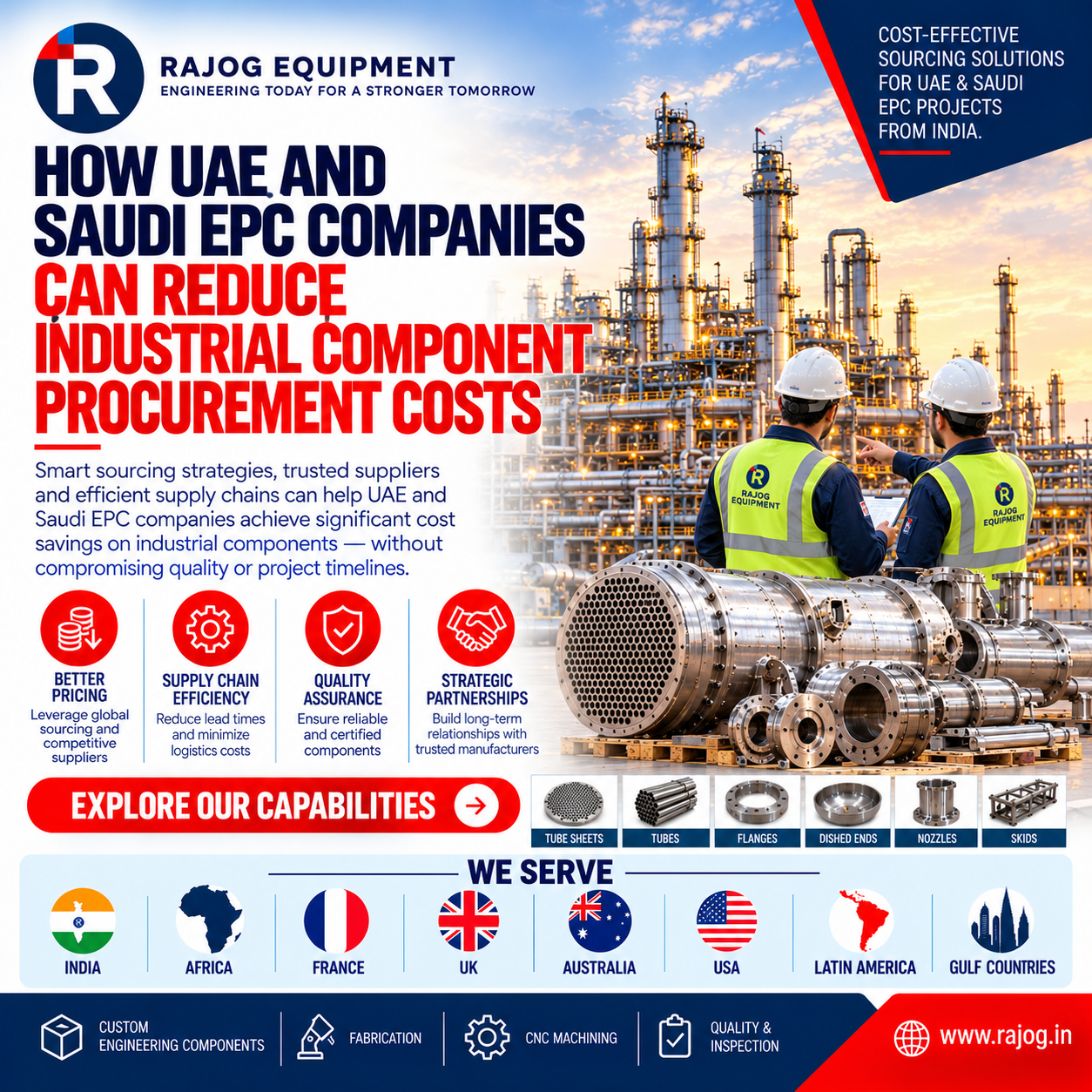
Industrial EPC projects in the UAE and Saudi Arabia require fabricated and machined components for oil and gas, petrochemical, power, water, desalination, steel, cement and process industries. These components are often manufactured to project-specific drawings. Reducing procurement cost does not necessarily mean selecting the cheapest quotation; a stronger approach is to reduce the total cost and risk associated with the purchase.
1. Compare Total Landed Cost
Use a like-for-like comparison that includes manufacturing, inspection, packaging, freight, customs, handling and rework risk. A supplier with a higher manufacturing price may still be more economical when quality and delivery are more predictable. Check that quoted scope, exclusions, delivery terms and technical assumptions are comparable.
2. Consider Direct Manufacturer Sourcing
Where practical, sourcing directly from a capable manufacturer can reduce unnecessary supplier layers. Direct communication may improve technical clarification, quotation accuracy, engineering discussions, production updates and inspection coordination. Confirm that the manufacturer itself has the required capability and that the commercial arrangement clearly assigns responsibilities.
3. Coordinate Fabrication and Machining
When a component requires both fabrication and machining, separate suppliers can add transportation, handling, scheduling, communication and inspection interfaces. An integrated supplier may coordinate multiple stages, provided the buyer verifies the equipment, process controls and capacity for each operation.
4. Improve RFQ Quality
Incomplete RFQs often lead to assumptions and inaccurate quotations. Provide drawings, material, quantity, tolerances, inspection and documentation requirements, delivery location and required schedule. Clarify any project-specific standards and approval requirements. Better technical information helps suppliers identify risks and price the work accurately.
5. Prevent Rework
Rework can quickly increase procurement costs and threaten the schedule. Common causes include incorrect dimensions, drawing interpretation issues, material errors, welding distortion, insufficient machining allowance and incomplete inspection. An early engineering review, agreed inspection plan and controlled clarifications can reduce avoidable errors.
6. Match Supplier Capacity and Plan Logistics
Review machine and fabrication capacity, material handling, shop-floor space, inspection capability and production planning to avoid choosing a supplier that cannot meet the component requirements. For large components, plan dimensions, weight, packing, lifting, shipping route, port handling and delivery terms early. Logistics can make up a significant part of total cost.
7. Build Qualified Long-Term Supplier Relationships
Repeated procurement from qualified suppliers can improve communication, technical understanding, quotation efficiency, production planning and quality consistency. A long-term relationship can provide value beyond an individual purchase order, while ongoing performance reviews help keep the supply base accountable.
Practical Cost-Reduction Framework
Use these actions to focus cost reduction on the complete procurement process:
- Supplier: compare capable direct manufacturers on a consistent scope
- RFQ: provide complete, approved technical information
- Manufacturing: coordinate fabrication and machining where practical
- Quality: prevent rework through defined inspection and review
- Logistics: plan export packing and shipping early
- Delivery: use realistic milestones and production monitoring
- Relationship: develop qualified suppliers for recurring needs
Why Indian Manufacturing Can Be Considered
Conclusion
Cost reduction in industrial procurement is best achieved by controlling quality, rework, supplier interfaces, logistics and delivery risk—not simply negotiating the lowest manufacturing price. A structured sourcing strategy can help UAE and Saudi EPC companies improve procurement value while meeting project requirements.